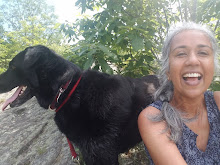
Happy Vishu, Happy Tamil New Year (called Sarvajith) to everyone! We celebrated it on the 14th of April, and had members of family over for lunch on Sunday. The dried neem flowers, from my earlier entry, were used in the sweet-sour-bitter chutney that we traditionally make that day - to denote how the year is indeed a mixture of everything - happy, sad, bitter, and sweet.
With our US taxes filed, I can now return to blogging.
With the arrival of the new year comes the hotter season. The months of
Chittirai and
Vaigasi in the Tamil calendar are known for their seering and unrelenting heat, and near 90% humidity. Mid-day temperatures are hovering between 32 (89.6 F) and 36 (96.8 F) degrees Celsius. Akbar seems unfazed by the sun on our noon-hour quickie-walk. I am the one wilting the heat! One breaks in to a sweat just at the exertion of toweling oneself dry after a shower, and overcoming the desire to have another shower is in itself is exhausting. (No, I do not exaggerate!) And yet, the worst is still to come. 40 and 42 degree temperatures await us in May. It is not uncommon to hear of the elderly or the homeless succumbing in this heat. Schools are mercifully closed, and we enjoy quiet, cool afternoons indoors, with outings planned in the mornings or late evenings.
Rajani is making good progress in her music lessons, inspite of losing many more front teeth (we tease her that we can only hear her hissing!).

I am sharing two new notes that she has learnt in Shankarabharanam -
Vara shiva balam, and Shyamale Meenakshi. Check 'em out if you have a minute. She is having a ball - having sleep overs with grandma and Geetha periamma. She is getting to meet other cousins, and friends' children her age, and hopefully, this summer, bond further with them.
As a little girl, I used to enjoy picking
marudhani leaves, grinding them to a paste, and staining my fingertips red. Popularly known as henna or mehandi, these leaves are said to cool the body, and it was traditional to apply the paste in the summer months. After dinner, and the household chores done with, the girls of the family made their beds, and had aunts and grandmothers put it on for them. Boys too got it on their toes, and on the soles of their feet. With both hands covered in green paste, taking care of those little itches that come only when one's hands are not available, or straightening that sheet over one's body just so, fell to the aunts, mothers and grandmothers. The next morning, there was a rush out to wash off the paste and see how red the stain turned out. Body chemistry played a part in why some got it just orange, while the others got it bright red.
Rajani, true to form, loves putting on marudhani. Earlier this week,

she spent a night with my mother, who applied the paste. Grandfather was there to take care of the itches & that pesky sheet, and the next morning, her hands turned out pretty darned red! The stain on the palm will slowly fade away, while the nails will stay orange until they grow out. This is the old fashioned style of applying the paste. Today, the norm, imported from North India and the Islamic tradition, is to have highly detailed artistic designs drawn. Brides will have henna applied up to their elbows!
The Cocount and its Myriad Uses
All independent (single family) homes in Chennai, with any property, will have a mango tree, a banana tree, possibly a couple of lemon trees, perhaps a neem, and most certainly, several coconut trees. Like the banana tree, whose every part is useful, the cocount is a pretty versatile one too. On this property at Indira Nagar, stand three, and every few months, a coconut tree climber is called to pick coconuts and prune the big leaves. You know it is time to call the climber when you narrowly miss one or two falling on your head, or at the very least, on your car! Today, I learnt, from the tree climber and our maid, that it is a bad omen to have a coconut branch fall on your head. (It comes from the practice of cremating corpses laid on dried coconut branches.) So, when the climber comes calling that there are several dry branches, one usually paid him to climb up and de-leaf.


Summer is a great time to enjoy cool coconut water, and you can tell if a coconut has lots of water or has matured to having more of the white in it, by its weight. My sister was recalling how in my grandmother's house, tender coconut were stored cool by
dropping them in the backyard well! They floated, stayed cool, and when you needed one, you just sent a pail down and fished one up! (Reminded me a little of how we kayaked in Prince William Sound with eggs in the water!)
The climber used a cool harness for his waist and feet, and climbed up a 50-foot tree in no time. He then pruned the branches to create a bed on which to drop the coconuts.

Spending about 20 minutes on each tree, he downed an average of 35 coconuts per tree. At the end of the busy morning, we had about 90 coconuts down, and another 20 tender ones, great for just drinking the water - all to be shared among the three families who live in the
apartment building.
Below is our climber (and check out his really cool fanny pack!), slicing the top off the coconut, and chipping a hole to drink the water from. He is typically paid 20-25 Rupees for every tree he climbs. His three children go to school, and have not been taught to climb trees. With his generation will die the coconut tree climber profession, and thirty years down the road will evolve the
arborist with his fancy equipment that will reach up pluck the coconut from the tree (and I doubt if it will share a tender coconut with us!)

Fairly soon after our tree climber had started his work, an old man appeared, asking if he would take away the coconut leaves - I really should call them
fronds. He proceeded to remove remove the green part of
each leaf in a frond, and pull out its spine. These pliable sticks, about 75-100 of them make a broom - like the one next to the blue bucket in the neighbor's yard below. Like I said, everything about a coconut tree has its uses. At the end of the day, nothing was wasted.


Bye for now!


 One mother was much more cautious and stayed on the bigger branches, while the other mom allowed her little one to wander off and explore a path to our terrace. One could watch them for hours!